Sales pipeline management is key for businesses wanting to boost their revenue. It shows the journey of potential deals through different sales stages. This helps in understanding where deals are and how to move them forward.
To optimize a sales funnel, you need a clear plan. This plan tracks each lead from first contact to closing the deal. With good sales pipeline management, companies can see how well they’re doing and where they can grow.
Mastering your sales pipeline lets you predict your earnings, spot problems, and speed up deals. This turns old sales methods into smart, data-based systems.
Key Takeaways
- Sales pipelines provide a strategic view of potential revenue opportunities
- Effective management requires consistent tracking and analysis
- Data-driven insights enable more accurate sales forecasting
- Pipeline optimization can significantly improve conversion rates
- Regular pipeline review helps identify and address potential obstacles
Understanding Sales Pipeline Fundamentals
Sales pipelines are key for businesses aiming to improve their sales and revenue forecasting. They help streamline these processes. A well-managed pipeline can greatly boost growth and performance.

Successful companies know that tracking sales opportunities needs strategic insight and strong CRM software. The right strategy can change how businesses predict and make revenue.
Defining a Sales Pipeline
A sales pipeline shows the journey of potential sales through various stages. It aids sales teams in:
- Tracking customer interactions
- Estimating potential revenue
- Understanding conversion chances
- Managing team performance
Sales Pipeline vs Sales Funnel
Sales pipelines and sales funnels are not the same. A sales pipeline looks at seller actions. On the other hand, a sales funnel views things from the customer’s perspective.
Benefits of Pipeline Management
Effective pipeline management brings many benefits:
- Better revenue forecasting
- Increased sales team efficiency
- Smarter resource use
- Deeper understanding of sales processes
Studies show that companies with clear sales pipelines grow 18% faster than rivals. This shows how vital strategic pipeline management is.
Sales Pipeline Management Essentials
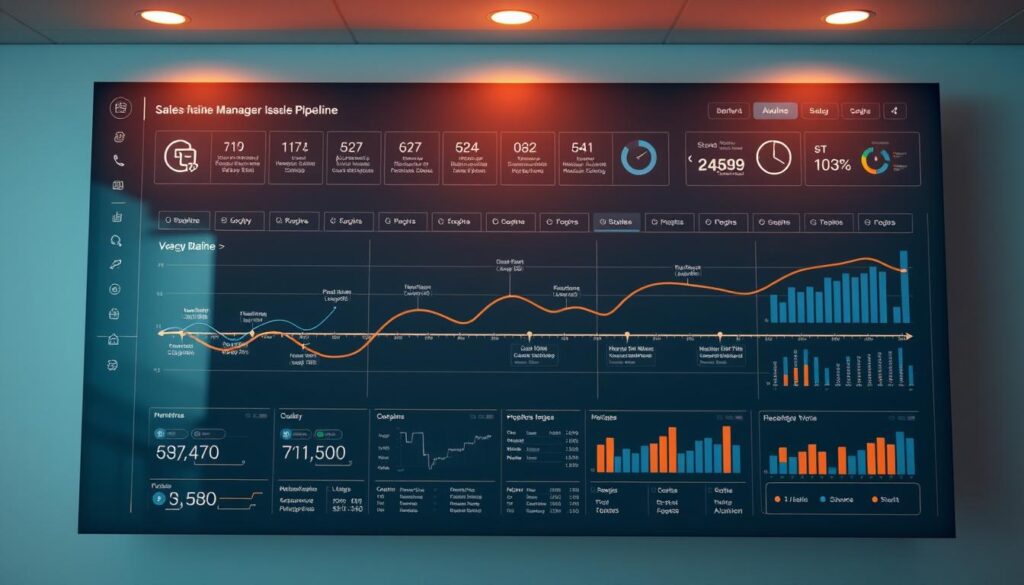
Managing a sales pipeline is more than just tracking leads. It’s about focusing strategically and moving deals forward smartly. This helps your sales team reach its full potential.
To track lead conversions well, you need a clear plan. Top sales teams know not all leads are created equal. They use a strong qualification system to focus on the most valuable ones.
- Implement a consistent lead scoring system
- Develop clear qualification criteria
- Create targeted follow-up strategies
- Leverage CRM technology for pipeline insights
Today’s sales pros use advanced tools to make deal progress smoother. Intelligent CRM platforms let teams track leads in real-time. This helps them spot promising leads fast and use resources wisely.
It’s important to regularly check your pipeline. Sales managers should do this often to:
- Check if leads are good
- Get rid of old opportunities
- Make conversion plans better
- Use resources better
Using data to manage your pipeline can really boost your team’s success. It can lead to much better conversion rates and overall performance.
Core Stages of an Effective Sales Pipeline
Building a strong sales pipeline is key for better sales team performance and managing opportunities. Each stage is important in turning potential leads into loyal customers.
Successful sales pros know a good pipeline needs careful movement through many stages. Let’s look at the main parts that lead to sales success.
Prospecting and Lead Generation
The start of a sales pipeline is all about finding new leads. Sales teams use different ways to find potential customers:
- Social media networking
- Referral programs
- Industry events and conferences
- Cold calling and email outreach
Lead Qualification Process
Not every lead is the same. A clear qualification process helps sales reps focus on high-potential opportunities. Important factors include:
- Budget availability
- Decision-making authority
- Demonstrated need for product/service
- Potential timeline for purchase
Proposal and Negotiation
Making strong proposals needs a deep understanding of what clients need. Good negotiation means offering solutions that solve specific customer problems.
Closing and Follow-up
The end stages of the sales pipeline need precision and building relationships. Good closing and follow-up can turn one-time deals into lasting partnerships.
Tools and Technologies for Pipeline Optimization

Today’s sales teams use advanced tech to manage their pipelines better. CRM software is key in changing how businesses track and improve their sales plans.
Pipeline analytics tools give deep insights for smarter decisions. They offer more than just managing contacts. They show sales performance and new chances.
- Advanced CRM software lets teams track sales in real-time
- Pipeline analytics spot sales process problems
- Automated reports give useful performance data
Important tools for better pipeline management include:
- Customer Relationship Management (CRM) platforms
- Sales intelligence software
- Predictive analytics tools
- Communication and collaboration platforms
By using these tools together, sales teams can work more efficiently. They can also forecast better and grow their sales. The right mix of pipeline analytics and CRM software changes how sales strategies are made.
Key Metrics and Performance Tracking
Sales teams use powerful pipeline analytics to turn data into useful insights. They track important metrics to find new chances and make their sales process better. Knowing these key indicators helps businesses make smart choices and improve their sales skills.
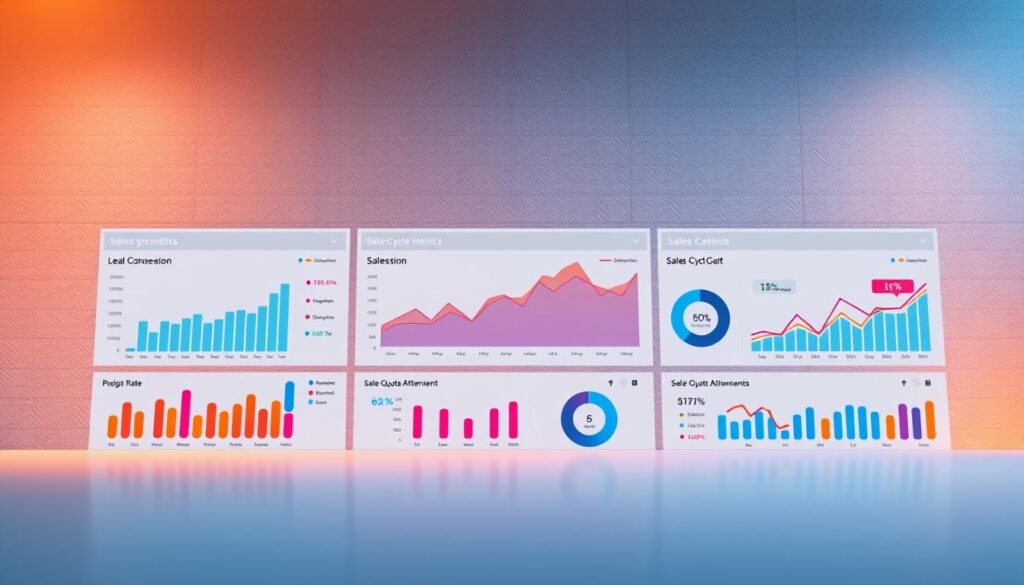
- Pipeline Velocity: Measuring how quickly deals progress through your sales stages
- Conversion rates between pipeline stages
- Average deal size by industry segment
- Win/loss ratio analysis
Pipeline Velocity Measurements
Pipeline velocity shows how fast your sales cycle moves. By looking at how long deals stay in each stage, teams can find and fix slow spots. Deals that move quickly often mean more money for your business.
Conversion Rate Analysis
Tracking conversion rates helps find where customers might leave. Sales teams can then work on their skills to keep more customers. Looking at each stage’s conversion rates helps them know where to focus for better results.
Deal Value Tracking
Keeping an eye on deal values helps predict future earnings. Teams can focus on big deals and plan strategies to make more money. Pipeline analytics turn numbers into useful business advice.
Conclusion
Effective sales pipeline management is key to growing a business. By using smart strategies and the latest tech, companies can improve their revenue forecasts. This leads to big wins for the business.
To make your sales pipeline better, you need to keep learning and adapting. Knowing each step of the pipeline helps sales teams make better choices. These choices can really boost your profits.
Want to improve your sales pipeline? Crowley Media Group can help. We offer top-notch services in SEO, PPC, AI, and automation. Our team will help you make your sales strategy more efficient. Get in touch with us today to see how we can help your business grow.
Call Crowley Media Group at (916) 572-9755 or visit crowleymediagroup.com. Find out how we can change your sales pipeline management. Let’s grow your business together.