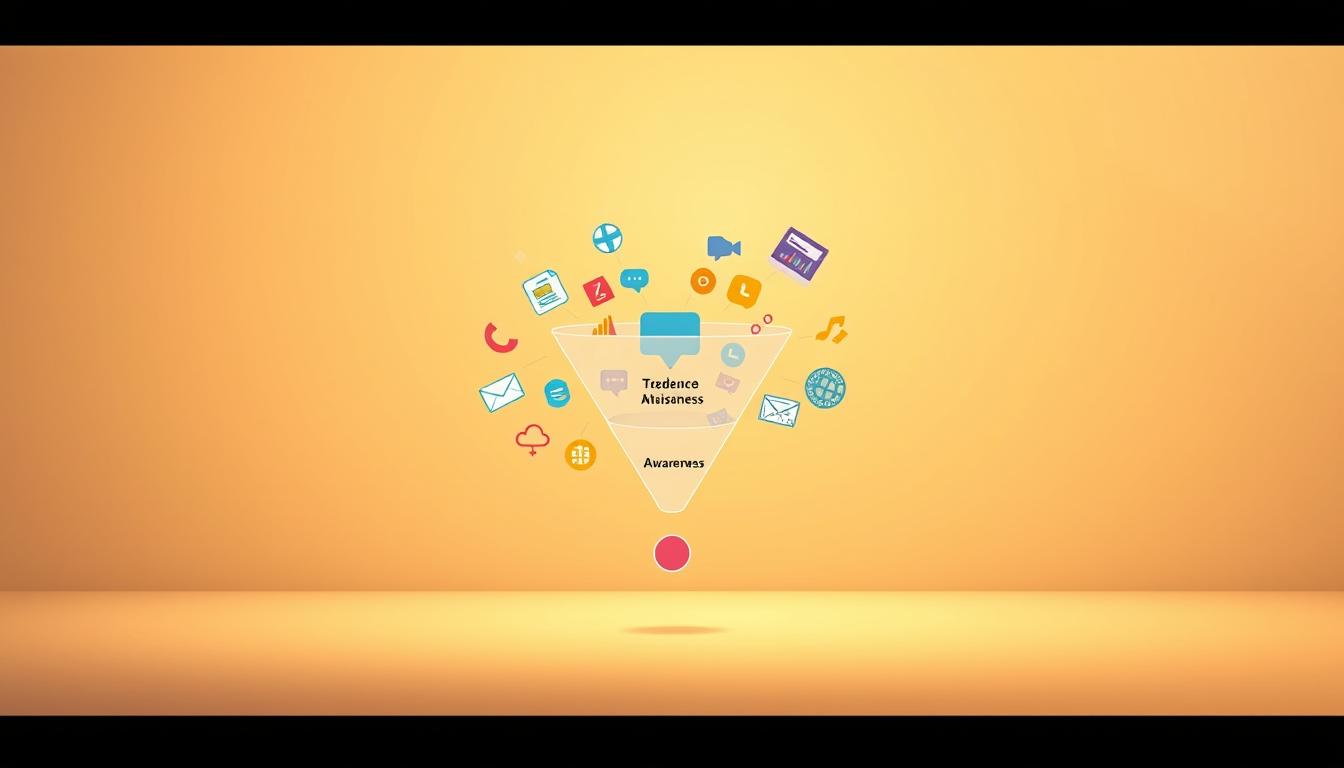
Digital marketing success starts with understanding sales funnels. For small businesses, creating a strategic marketing funnel is key. Crowley Media Group suggests developing a plan that guides potential customers from awareness to purchase.
A sales funnel shows the customer’s path through your business. It turns casual browsers into committed buyers by mapping out engagement stages. Affordable sales funnel strategies help small businesses compete in the digital market.
Having a well-designed funnel lets entrepreneurs track customer interactions and improve marketing. By understanding each stage of the customer journey, businesses can create messages that connect with their audience.
Key Takeaways
- Sales funnels map the customer’s purchasing journey
- Strategic marketing approaches drive customer acquisition
- Targeted content increases conversion potential
- Small businesses can implement cost-effective funnel strategies
- Understanding customer behavior leads to better marketing results
Understanding the Fundamentals of Sales Funnels
Sales funnels are key for small businesses to boost lead generation and conversion. They guide potential customers to become loyal buyers through a strategic journey.
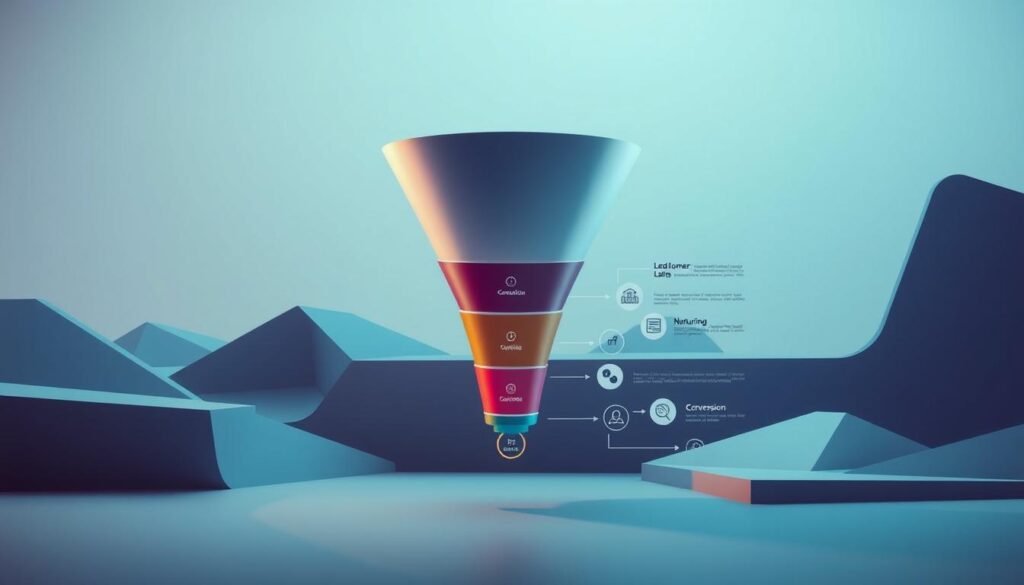
A sales funnel shows a customer’s journey from first seeing your product to buying it. Thanks to small business automation, these funnels are now easier and more effective.
What is a Sales Funnel?
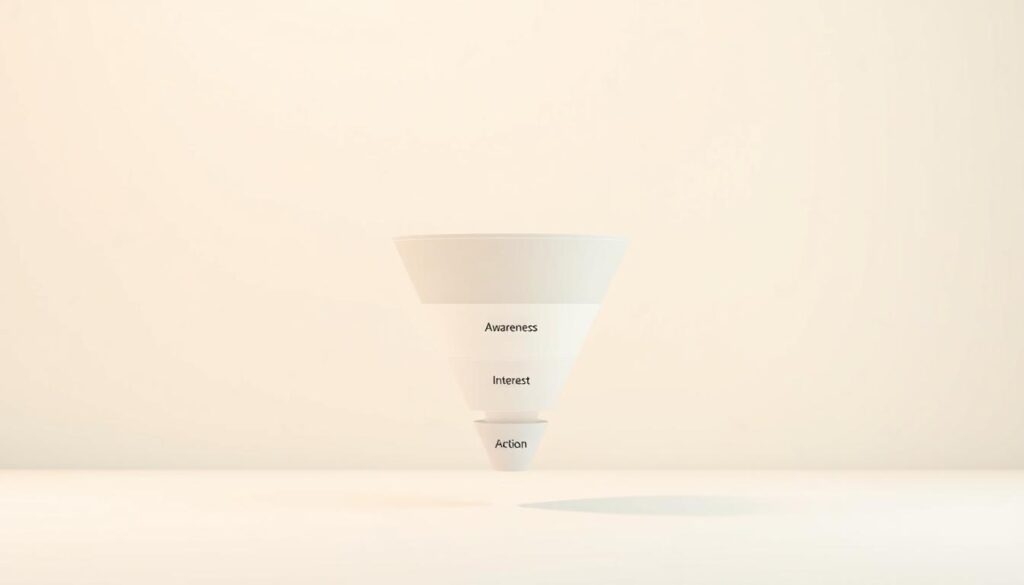
A sales funnel is like a visual guide for a customer’s journey. It starts wide, where many people first see your product, and gets narrower as they move closer to buying.
- Top of Funnel: Awareness and attraction
- Middle of Funnel: Consideration and evaluation
- Bottom of Funnel: Decision and purchase
Key Components of an Effective Sales Funnel
Good sales funnels have a few key parts to help guide customers:
- Compelling Landing Pages
- Targeted Email Campaigns
- Clear Value Propositions
- Strategic Call-to-Action Buttons
The Customer Journey Through Your Funnel
Knowing how customers move through your funnel helps improve lead generation. Each stage needs its own content and approach to help potential buyers.
With a well-designed sales funnel, small businesses can automate marketing, track customer interactions, and boost conversion rates.
Marketing Funnels for Small Business: Essential Steps to Success
Small businesses can change their marketing by using digital marketing workflows. A good sales pipeline helps catch and grow potential customers better.
Mapping the customer journey is key to knowing how people interact with your brand. By breaking down the sales funnel, businesses can make strategies that meet customer needs.
- Identify your target audience’s specific pain points
- Create personalized content for each funnel stage
- Develop a consistent communication strategy
- Track and analyze customer interactions
Successful digital marketing needs careful planning and always improving. Small businesses should:
- Awareness generation through targeted marketing channels
- Capturing potential customer information
- Nurturing leads with relevant content
- Converting interested prospects into paying customers
By using these strategies, small businesses can build a strong sales pipeline. This pipeline guides potential customers from first contact to buying. The goal is to understand each customer’s journey and add value at every step.
Creating High-Converting Content for Each Funnel Stage
Content is key in connecting potential customers with your brand’s value. Creating content for each sales funnel stage boosts customer acquisition and ROI. This is crucial for marketing success.
To make targeted content, you must know what potential customers need at each stage. Smart businesses create content that addresses specific challenges and motivations.
Top of Funnel Content Strategies
At the awareness stage, your content should:
- Attract attention with educational blog posts
- Create engaging social media content
- Develop informative infographics
- Produce problem-solving video tutorials
Middle of Funnel Engagement Tactics
When prospects show interest, focus on content that:
- Demonstrates deeper expertise
- Provides comparative resources
- Offers detailed case studies
- Shares customer success stories
Bottom of Funnel Conversion Techniques
At the decision stage, use content to encourage action:
- Targeted product demonstrations
- Personalized email campaigns
- Free consultation offers
- Compelling testimonial compilations
By aligning content with each funnel stage, businesses can guide customers smoothly. This approach boosts conversion rates and supports growth.
Building Your Sales Pipeline Development Strategy
Creating a strong sales pipeline needs careful planning and ongoing improvement. Small businesses can use effective lead generation methods. This helps change their digital marketing and boosts sales.
To start well, you must know your audience and have a plan to draw in customers. Important steps include:
- Using targeted lead generation techniques
- Applying data-driven ways to improve conversion
- Streamlining digital marketing processes
- Monitoring and studying performance metrics
AI and automation can greatly help your sales strategy. Crowley Media Group’s advanced services automate routine tasks. This lets teams spend more time on important interactions. With smart tools, companies can:
- Lessen manual data entry
- Make customer messages more personal
- Spot top leads quicker
- Improve the path to sales
Building a good sales pipeline is a continuous effort. It’s important to keep testing, improving, and adjusting. Small businesses should see their pipeline as a living tool. It should grow with market changes and customer habits.
Conclusion
Building a good sales funnel is not hard for small businesses. It’s all about understanding your customer’s journey. You need to create marketing strategies that lead them from knowing about you to buying from you.
By knowing each step of the funnel, you can make plans that really talk to your audience. This way, you meet their needs right where they are.
Creating a sales funnel that works doesn’t have to cost a lot. The best funnels focus on making the customer happy. They offer useful content and make it easy to buy from them.
Keep it simple when you’re planning your marketing. This often works better than complicated plans.
Want to improve your marketing? Crowley Media Group can help. We use SEO, PPC, AI, and automation to make your sales funnel better. Our team will turn your marketing into a powerful tool that gets results.
Don’t let marketing problems slow you down. Call Crowley Media Group at (916) 572-9755 or visit crowleymediagroup.com. Let us help you grow your business with a better sales funnel.