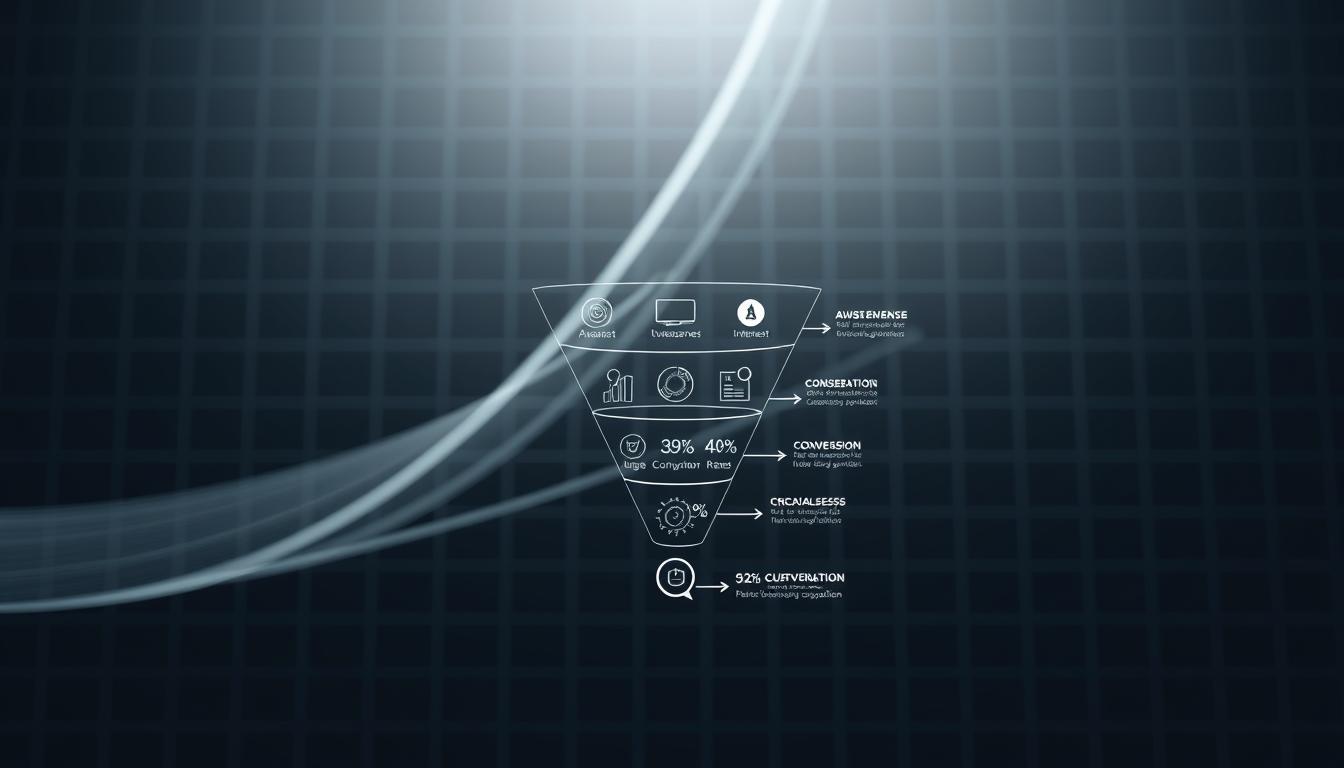
Imagine having a powerful conversion pipeline that turns casual website visitors into loyal customers. A strategic sales funnel does just that. It creates a systematic way to make money by guiding potential clients through a buying journey.
Most businesses find it hard to turn leads into customers. The truth is, without a good sales funnel, you’re missing out on money. Smart entrepreneurs know that a well-made conversion pipeline is key to growing their business.
Your sales funnel shows the whole customer experience, from first awareness to buying. By improving each stage, businesses can better attract, engage, and convert potential customers.
Key Takeaways
- Sales funnels provide a structured approach to customer acquisition
- Effective funnels transform browsers into committed buyers
- Strategic pipeline design increases overall revenue potential
- Understanding customer journey is crucial for conversion success
- Systematic funnel optimization leads to sustainable business growth
What Is a Sales Funnel and Why Does It Matter for Your Business
Imagine a tool that guides potential customers from first hearing about your business to becoming loyal buyers. That’s what a sales funnel does for your business strategy. It’s a visual map of the customer journey, showing the path from awareness to purchase.
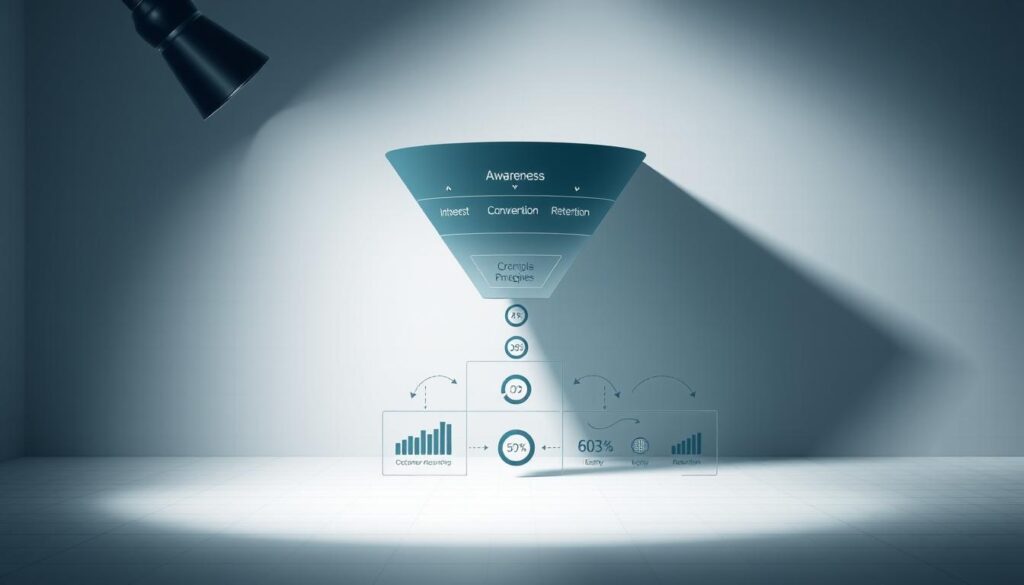
The sales funnel is key to attracting and converting leads. It’s like a funnel: wide at the top, catching many, and narrowing to those who buy.
Understanding the Customer’s Path to Purchase
The buyer’s path has several stages:
- Awareness: Potential customers first learn about your product or service
- Interest: Prospects start researching and exploring your offerings
- Consideration: Leads decide if your solution meets their needs
- Decision: Qualified prospects choose to make a purchase
Driving Business Growth Through Strategic Funnels
Effective sales funnels offer big benefits for businesses:
- They help find where customers drop off
- They improve marketing and sales strategies
- They boost conversion rates
- They predict and increase revenue
By using a well-designed sales funnel, businesses can change how they attract and keep customers. They turn casual browsers into committed customers.
The Essential Stages of a High-Converting Sales Funnel
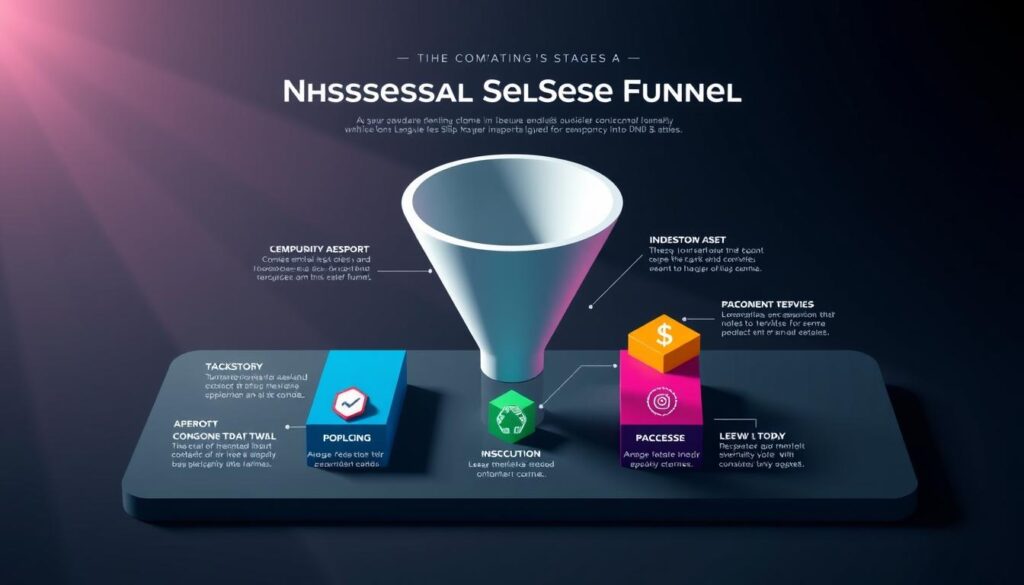
Understanding the sales funnel is key to turning potential customers into loyal buyers. The sales process is a strategic journey. It guides prospects from first awareness to final purchase.
A typical sales funnel has three main stages. These stages show how a customer moves through the process:
- Top of Funnel (TOFU) – Awareness Stage
- Attract potential customers
- Generate initial interest
- Create broad market visibility
- Middle of Funnel (MOFU) – Consideration Stage
- Nurture interested prospects
- Provide detailed information
- Build trust and credibility
- Bottom of Funnel (BOFU) – Decision Stage
- Convert prospects into customers
- Address final objections
- Facilitate purchase decision
Each stage needs specific strategies to move prospects smoothly. By knowing these stages, businesses can tailor content and offers. This resonates with potential customers at different points in their journey.
Successful sales funnels fit specific business models, like lead generation or product launches. The goal is to have a flexible approach. This meets your unique customer needs.
Identifying Your Ideal Customer Profile and Mapping Their Journey
Understanding your target audience is key to a successful sales funnel. You must know who you’re trying to reach and what drives them to buy.
Great businesses know that a clear customer profile changes how they convert leads. Your ideal customer profile (ICP) is more than just basic info. It digs deep into what makes potential buyers tick.
Defining Your Target Audience with Buyer Personas
Creating buyer personas takes a lot of research and smart thinking. You need to focus on:
- Detailed demographic information
- Professional challenges and goals
- Preferred communication channels
- Specific pain points in their buyer’s path
To make a strong ICP, collect data from:
- Customer surveys
- Sales team feedback
- Website analytics
- Social media insights
Turning Leads into Prospects with Strategic Qualification
The BANT framework helps qualify leads in your sales funnel. It checks if potential customers have:
- Budget: Enough money to buy
- Authority: The power to decide
- Need: A need for your solution
- Timing: Are they ready to buy now?
Using these strategies, businesses can make their lead conversion smoother. They can then focus on the most promising customers.
Creating Compelling Offers and Optimized Landing Pages That Convert
Making an offer that people can’t resist is key to a successful conversion pipeline. Your landing page is the first step to turning leads into customers. It’s about creating an offer so good, people can’t wait to act.
What makes a landing page great includes:
- A headline that grabs attention right away
- Copy that talks about the benefits and solves problems
- Images that support your message
- Clear call-to-action buttons
- Trust-building elements like testimonials
Your sales funnel needs a well-thought-out offer. Start with a free lead magnet that solves a problem right away. This could be a template, checklist, or mini-course that shows you know your stuff.
Marketing automation helps a lot here. It makes creating offers that match each stage of the funnel easier. This way, you guide people smoothly from interest to buying.
The best landing pages are simple and focused. Cut out distractions, keep forms short, and make sure it loads fast. You want it to be easy for people to take the next step.
Building Automated Nurture Sequences to Move Prospects Through Your Pipeline
Capturing leads is just the start. The real challenge is turning those leads into loyal customers. Marketing automation has changed how we communicate with customers, making it more personal and efficient.

Effective lead nurturing needs a clear plan. It guides potential customers through their buying journey. Here are some strategies to improve your sales process:
- Create targeted email sequences that deliver consistent value
- Segment leads based on their interests and interactions
- Design personalized communication paths
- Implement intelligent lead scoring mechanisms
Email Marketing Strategies for Lead Nurturing
Your email strategy should build trust and show your expertise. Start with a welcome email that adds value right away. Make sure your messages educate, solve problems, and highlight your unique solutions.
- Send a warm welcome email with promised resources
- Share educational content relevant to lead’s interests
- Gradually introduce product solutions
- Include clear calls-to-action
Using Marketing Automation to Scale Your Sales Process
Marketing automation tools make delivering personalized experiences easy. Use smart systems that track lead behavior, send specific messages, and focus on the most promising leads.
By using these advanced methods, you can turn your conversion pipeline into a well-oiled machine. It will nurture leads with precision and care.
Testing, Tracking, and Optimizing Your Funnel Performance
Creating a successful sales funnel is not a one-time task. It’s a continuous process of making it better. Your funnel needs constant care to boost lead conversion and enhance your sales cycle.
Effective optimization starts with tracking everything closely. You should watch:
- Top of funnel: Traffic sources and visitor numbers
- Middle of funnel: Email engagement and lead quality
- Bottom of funnel: Conversion rates and customer acquisition costs
A/B testing is a key strategy for better funnel performance. Small changes can make a big difference. Try testing:
- Landing page form lengths
- Call-to-action button colors
- Email subject lines
- Content messaging
Tools like session recording software and heatmap analytics can show you where people get stuck. These tools help find and fix issues in your funnel.
Keep in mind, sales funnel conversion rates vary. They usually range from 2-5%. But, top performers can hit 10% or more. With ongoing testing and smart tweaks, you can turn an average funnel into a high-earning one.
Conclusion
Building an effective sales funnel is more than a marketing strategy. It’s a powerful way to make money by connecting with potential customers. The journey to becoming a customer is complex. But, with the right steps, you can guide leads smoothly from the start to becoming loyal customers.
Our exploration shows that successful lead conversion needs a deep understanding of your audience. By understanding each stage of the sales funnel, you can create content, optimize pages, and use automated sequences. These steps build trust and increase engagement.
Creating a high-performing sales funnel is about doing it right, not just talking about it. It’s important to test, optimize, and use data to improve your funnel. Companies like Crowley Media Group use SEO, PPC, AI, and automation to create advanced strategies.
If you want to improve your customer acquisition and make more money, expert help can help a lot. Crowley Media Group offers detailed support in making and improving sales funnels. Visit crowleymediagroup.com or call (916) 572-9755 to grow your business.