Digital marketers face a big challenge: turning website visitors into paying customers. Conversion rate optimization is more than just a buzzword. It’s the key to explosive growth without spending a lot on ads.
In 2025, smart brands know that just driving traffic isn’t enough. They need strategic conversion tactics. Every visitor is a chance to make money, and the right optimization can unlock it.
Crowley Media Group knows that good marketing ROI isn’t about spending more. It’s about converting better. They use SEO, PPC, and AI to help businesses get the most out of every digital interaction.
Key Takeaways
- Conversion rate optimization delivers exponential returns
- Small strategic tweaks can dramatically improve performance
- Focusing on conversion beats continually increasing ad spend
- Professional services can accelerate optimization results
- Data-driven strategies trump generic marketing approaches
Understanding the Power of Conversion Rate Optimization
Digital marketing has changed a lot. Now, it’s all about making the most of what you have. Businesses need to turn visitors into customers through smart conversion rate optimization (CRO).

Marketers see website analytics as more than just numbers. They help find out what customers really do. This info lets businesses make small changes that can really boost sales.
Why CRO Outperforms Paid Traffic in 2025
The world of digital ads has changed a lot. With more money going into search ads, just getting more visitors isn’t enough. Making those visitors do more is where the real money is.
- Small changes in conversion rates can lead to big gains
- Improving what you already have is cheaper than getting new visitors
- Targeting better means spending less on ads
The Real Cost of Ignoring Conversion Optimization
Not focusing on CRO can cost a lot. Performance metrics matter. Even a little delay can hurt sales a lot. Every interaction is a chance to make things better and get more conversions.
What Counts as a Conversion in Today’s Digital Landscape
Tracking conversions has changed. Now, it’s not just about buying things. Website analytics track things like:
- Email newsletter sign-ups
- Video content completions
- Interactive quiz participation
- Product configuration sessions
Seeing these small actions gives a full picture of your sales funnel. It helps make smarter marketing plans.
Strategic A/B Testing and Statistical Significance

A/B testing changes digital marketing by using science to boost website performance. It helps businesses make choices based on data, improving both conversion rates and user experience.
To start A/B testing, follow these key steps:
- Find pages that could lower bounce rates
- Pick one thing to test
- Create two different versions of the page
- Make sure the sample size is big enough
- Run the test for at least a week
Getting good at A/B testing means being precise. Changing just one thing can lead to big wins. Big names have seen huge improvements:
- HubSpot got 24% more leads by changing a button color
- Basecamp got 30% more sign-ups by tweaking their headline
Tools like Optimizely and Google Optimize make testing easy for all businesses. By testing and tweaking website parts, companies can cut bounce rates and boost conversions.
Important tips for A/B testing include:
- Use a 95% confidence level for statistical significance
- Figure out the right sample size
- Keep track of and learn from each test
- Keep making improvements
The aim of A/B testing is to understand how users behave. By seeing optimization as a never-ending learning journey, businesses can make their digital experiences better and more engaging.
Optimizing Your Landing Pages for Maximum Impact
Landing page optimization is key to turning website visitors into loyal customers. Digital marketers know a well-made landing page boosts user experience and conversion rates.
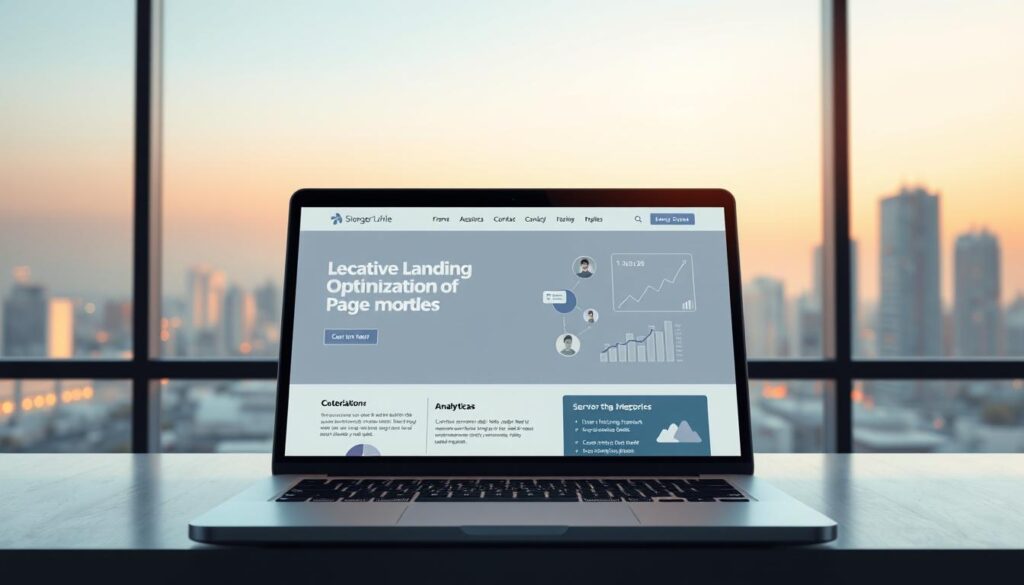
Creating a successful landing page needs careful planning and attention to detail. The aim is to make a smooth, easy experience that leads visitors to take action.
Message Matching Between Ads and Landing Pages
Alignment is crucial in landing page optimization. Your landing page should match the ad’s promise to build trust and avoid confusion.
- Ensure headline consistency with ad messaging
- Match visual design elements
- Maintain consistent value proposition
Eliminating Distractions and Friction Points
Every extra thing on your landing page can hurt conversions. Make your design simple to keep visitors focused on the main action.
- Remove complex navigation menus
- Minimize form fields
- Use clear, compelling call-to-action buttons
Mobile-First Landing Page Design Principles
Mobile traffic is now the norm, so landing page optimization must focus on mobile users. Design pages that work well on smartphones, load fast, and are easy to use.
- Use touch-friendly button sizes
- Optimize page loading speed
- Implement responsive design techniques
Using these strategies can greatly improve user engagement and increase conversion rates in digital marketing campaigns.
Leveraging Social Proof and Trust Signals to Build Credibility
Customer journey mapping shows us something important. Before buying, people want to be sure. Social proof is a strong tool that helps turn doubt into confidence.

Using social proof well can really help your sales. Here are some key ways to build trust:
- Customer testimonials with real names and photos
- Specific numerical claims about user base
- Recognizable brand logos
- Security badges and certifications
- Real-time activity notifications
When adding social proof to your customer journey, be real. Specific details matter more than generic claims. Instead of saying “many customers,” show exact numbers like “Trusted by 50,000+ businesses.”
Where you put trust signals is also important. Place them near important steps like signing up, looking at products, and checking out. Video testimonials can boost sales by up to 20%, offering a lively and convincing proof.
The main aim is to ease worries and boost confidence as people buy. By sharing real stories from happy customers, you create a story that makes people want to buy.
Streamlining Your Checkout Flow and Form Design
Checkout optimization is key in your sales funnel analysis. It’s the last chance to win over customers. Making it smooth can boost your sales.
The checkout process is super important for user experience (UX). Even small tweaks can make a big difference. Studies show that making forms simpler can increase sales by up to 35%.
Reducing Form Fields for Higher Completion Rates
Every extra form field can slow down sales. Here are some tips to make checkout faster:
- Keep only the most important info on forms
- Use single-column layouts for quicker filling
- Provide feedback as customers fill out forms
- Use auto-fill and address prediction
Implementing Single-Page Checkout Experiences
Single-page checkouts make shopping easier. They cut down on steps, making it quicker and simpler for customers.
Adding Multiple Payment Options and Guest Checkout
Offering many payment options is crucial today. It helps keep customers from leaving:
- Credit card payments
- PayPal integration
- Apple Pay
- Google Pay
- Buy Now, Pay Later services
By focusing on user experience and these checkout tips, businesses can improve sales. They can also make shopping smoother for everyone.
Personalization and Dynamic Content Strategies
Personalization has changed digital marketing. It now focuses on each user, not just a general audience. This approach boosts conversion rates a lot. By using website analytics and mapping the customer journey, businesses can offer experiences that speak to each visitor.
Personalization’s strength is in giving users the right content at the right time. Here are some strategies for using dynamic content:
- Segment visitors based on clear criteria:
- New vs. returning visitors
- Traffic source
- Geographic location
- Device type
- Customize content based on user behavior:
- Product recommendations
- Personalized call-to-action buttons
- Adaptive landing pages
Starting personalization doesn’t need a lot of money. Small changes can make a big difference. For example, changing email subject lines or website content based on user history can really boost engagement.
Website analytics are key for personalization. They help track user actions. This lets businesses create better customer journeys that meet user needs and guide them smoothly to buy.
Begin with the basics: Start with simple segmentation and then add more complex personalization. The goal is to add value, respect privacy, and keep improving based on data.
Conclusion
Conversion rate optimization is more than a strategy; it’s a game-changer for digital marketing. The nine tactics we’ve looked at are a guide to turning visitors into loyal customers. By focusing on user needs and testing, businesses can see big improvements in their marketing return on investment.
The magic of conversion rate optimization is in its small steps leading to big wins. A tiny boost each month can add up to huge gains over a year. Every improvement adds to your long-term success online.
For those looking to boost their CRO efforts, Crowley Media Group is here to help. Their team uses SEO, PPC, AI, and marketing automation to unlock your site’s full potential. They help brands turn clicks into lasting customer connections.
Want to boost your online performance? Crowley Media Group is all about strategic conversion rate optimization that works. Call (916) 572-9755 or visit crowleymediagroup.com for a free conversion audit and see how you can grow.