Digital marketing has changed from guesswork to a science of measurement. Today, marketers face a big challenge. They must make marketing measurement clear and focus on what really matters.
Good marketing isn’t about gathering lots of numbers. It’s about knowing which metrics are important and how they help your business. Metrics that look good but don’t help your business are not worth it.
Data-driven marketing needs a smart plan. By looking at real performance metrics, businesses can make better choices. These choices can boost revenue, improve customer engagement, and lead to success in the long run.
Key Takeaways
- Marketing metrics must align with business goals
- Not all data points are equally valuable
- Focus on metrics that drive actionable insights
- Understand the difference between vanity and performance metrics
- Measurement is crucial for strategic marketing decisions
Why Marketing Measurement Is the Foundation of Success
Data is key in today’s marketing world. Guesswork and intuition are not enough anymore. Businesses need to measure their marketing to make informed choices.
Marketing without data is like sailing blind. You might move, but you won’t know if you’re on the right path.
The True Price of Gut-Driven Marketing
Marketing based on feelings can cost a lot. Here are some risks of not using data:
- Wasted advertising budget
- Ineffective campaign strategies
- Missed growth opportunities
- Inability to track real performance
Transforming Marketing Chaos into Clear Insights
Good measurement turns marketing data into actionable intelligence. With strong tracking systems, businesses can:
- Understand customer behavior
- Optimize marketing channels
- Predict future trends
- Maximize return on investment
Smart marketers see measurement as a powerful tool. It uncovers hidden chances for growth and innovation.
The Difference Between Marketing Outputs and Business Outcomes

Marketing teams often focus too much on numbers. They celebrate metrics that look good but don’t really help the business grow. For example, making 50 blog posts a month might seem like a win. But the real question is, do those posts bring in organic traffic, leads, or make the company a thought leader?
Let’s look at the main differences between outputs and outcomes:
- Outputs are things like content made, emails sent, or social media posts shared
- Outcomes are the real business effects, like money made, new customers, or bigger market share
Many marketers get caught up in how much they produce. They might brag about sending 100,000 emails. But what really matters is how many people actually buy something or ask for a demo.
To make a difference, ask two important questions for every marketing effort:
- What business goal does this support?
- How does this directly help the company’s goals?
Real marketing success isn’t just about being busy or making lots of content. It’s about making smart moves that help move people through the buying process and grow the business.
Essential Metrics Every Marketer Should Track
Marketing success depends on knowing the right metrics. These metrics show how well your campaigns are doing. It’s important to focus on what really matters.

Customer Lifetime Value and Acquisition Cost: The Power Duo
Two key metrics are at the heart of marketing success: Customer Lifetime Value (CLV) and Customer Acquisition Cost (CAC). These metrics help businesses see how their marketing investments are doing.
- Customer Lifetime Value shows the total money a customer brings in over time.
- Customer Acquisition Cost is how much it costs to get each new customer.
- The ideal CAC ratio is usually 3:1 or higher.
Understanding the Marketing Funnel: Awareness to Decision
The marketing funnel shows a customer’s journey from start to finish. Each step needs its own metrics to measure success.
- Awareness Stage: Look at impressions, reach, and website traffic.
- Consideration Stage: Check engagement like time on page.
- Decision Stage: Focus on conversion tracking and final purchase metrics.
Conversion Rate and What It Really Tells You
Conversion rate shows how many potential customers actually act. The average click-through rate is about 6.6% for search and 0.6% for display. But, it’s the context that counts more than the numbers.
Conversion rates should be seen as part of a bigger picture. Consider traffic volume, industry standards, and your business model.
Analytics and Tracking: Building Your Marketing Dashboard
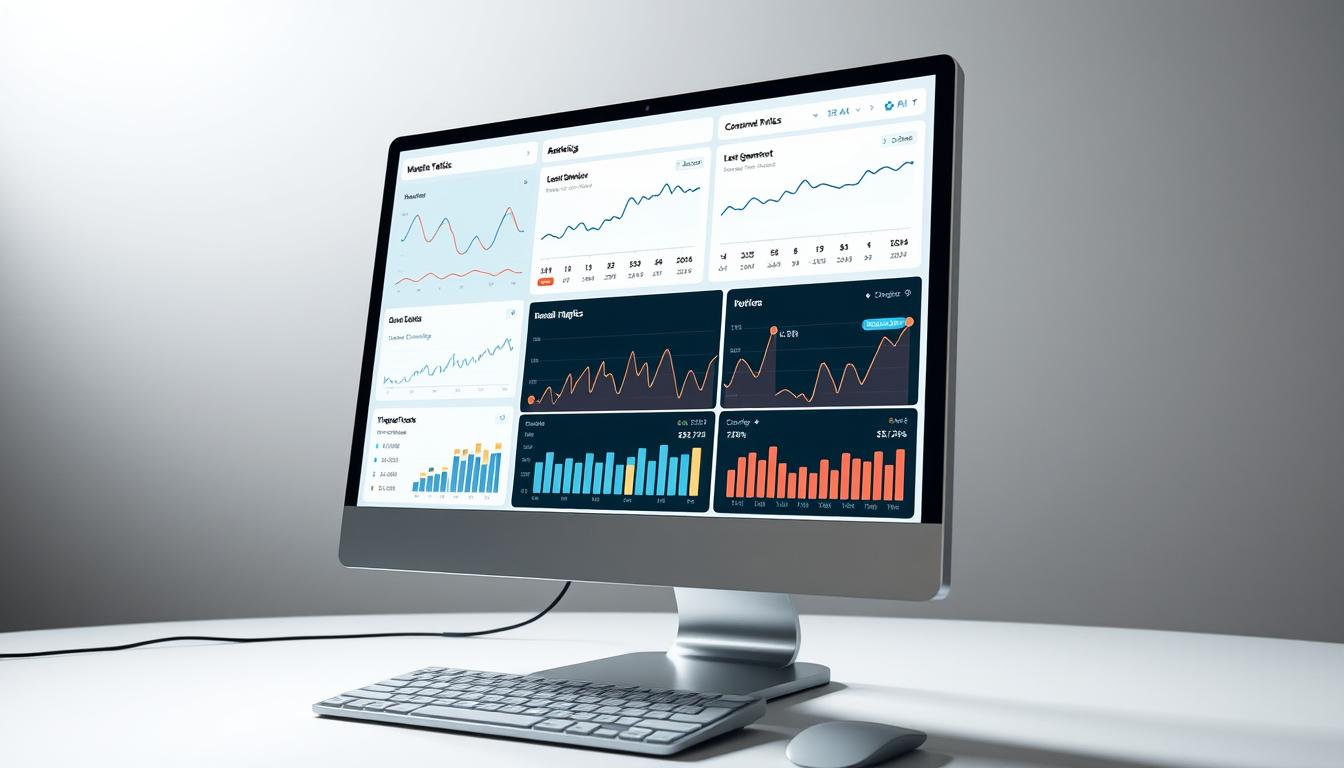
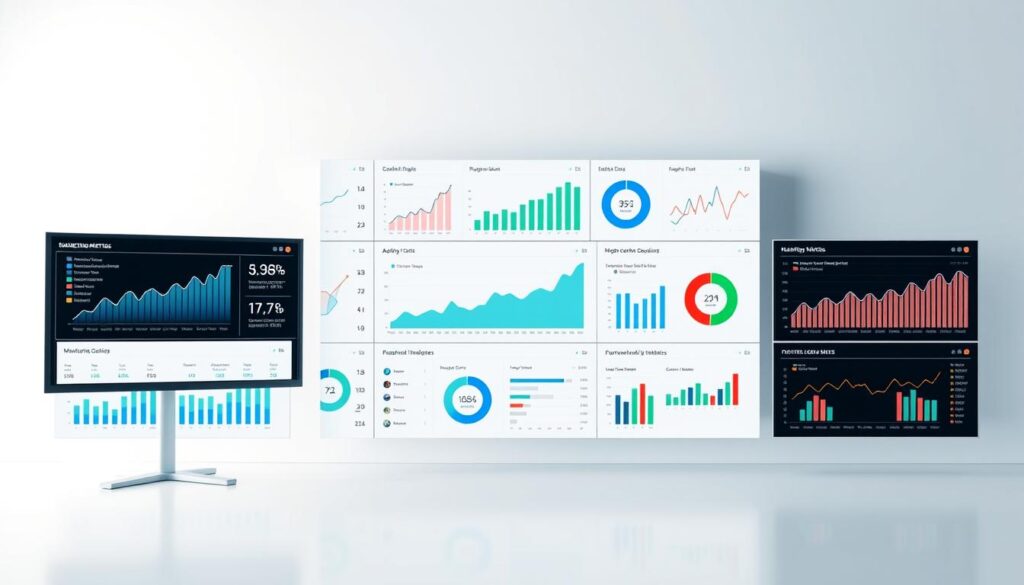
Turning marketing data into useful insights needs a smart dashboard design. Today’s marketers need tools that make complex data easy to understand.
Real-Time Data Visualization Tools That Matter
Begin with simple steps when making marketing dashboards. Focus on metrics that really matter for your business. Use graphs and colors to make data easy to scan for everyone.
- Create customized dashboards for specific roles
- Use color-coded graphics for quick comprehension
- Prioritize metrics with direct business impact

Executives need big-picture views, while campaign managers want detailed info. Experts in analytics can craft dashboards that meet each team’s needs.
Attribution Modeling and User Behavior Metrics
It’s key to understand how customers move through your marketing. Different models show how customers interact with your brand in unique ways.
- First-touch model: Tracks initial customer interaction
- Last-touch model: Identifies final conversion point
- Linear model: Distributes credit equally across touchpoints
- Time-decay model: Weights recent interactions more heavily
Metrics like scroll depth and click patterns give deeper insights into how customers engage. The right attribution model depends on your specific business model and sales cycle.
Setting up analytics systems might seem tough, but starting right makes it easier. Working with experts who get both the tech and strategy can really boost your marketing.
Common Metric Mistakes and How to Avoid Them
Marketers often make mistakes when they analyze performance metrics. Picking the wrong metrics can lead to bad strategies and no growth in revenue. For example, focusing only on conversion rate while site traffic goes down is a big mistake.
Some common mistakes include:
- Confusing outputs with outcomes – tracking surface-level engagement without connecting to real business goals
- Overemphasizing vanity metrics like social media likes that don’t translate to meaningful results
- Ignoring Quality Score in PPC campaigns, which ultimately increases advertising costs
- Misinterpreting metrics in isolation without considering broader context
To track metrics well, you need a smart plan. Marketers should link metrics to leadership’s main goals and long-term business plans. Remember, metrics can be affected by many teams, like sales and customer success.
To avoid common mistakes, create a detailed measurement plan that:
- Connects metrics to revenue generation
- Uses statistical significance to validate data
- Considers metrics in a holistic context
- Regularly reviews and realigns performance indicators
By knowing these key measurement rules, marketers can turn data into useful insights. These insights can help grow the business.
Making Your Metrics Actionable for Real Growth
Turning data into growth needs a smart plan for marketing metrics. Good marketers see numbers as a guide to better performance and more sales.
To start, set clear goals for success. These could be:
- Increasing brand awareness
- Boosting sales
- Getting more leads
Crafting Precise Strategic Approaches
Segmenting data is key to finding important insights. By looking at data by audience, device, and location, marketers spot trends and chances.
Continuous Campaign Refinement
A/B tests are a way to make marketing better. They help improve:
- Ad copy
- Targeting
- Design
Linking metrics to business goals like revenue makes data useful. Regular checks stop waste and find problems fast.
Metrics should guide your marketing to keep getting better. Check performance weekly and do deep reviews monthly. This keeps your strategy sharp and ready for changes.
Conclusion
Marketing metrics are more than just numbers. They are the language of business growth. They turn complex customer interactions into clear insights.
Crowley Media Group helps businesses use these metrics well. They offer services like SEO and PPC campaigns. Their team provides the skills and advice needed to succeed.
Starting your marketing journey is simple. Just begin by measuring your efforts. Use advanced tracking and AI to grow your business.
For those looking to improve their marketing, the way forward is clear. Invest in good analytics and keep learning. See data as your most valuable asset. With the right approach, your marketing can drive amazing results.